From the WKAR News 2026 strategic plan
A small newsroom, built to go deeper.
WKAR is a small newsroom in a crowded local market. We were not going to stand out by chasing the same nuts-and-bolts campaign stories as everyone else. Our advantage is time: more room on the air for long-form interviews, sustained conversation and daily analysis. I built Election 2026 around that advantage—an in-depth political brand, not a collection of links.
I wrote the strategy, designed the prototype, set the editorial promise and four-part structure, and hired a full-time local politics reporter to deepen the coverage. Then I handed the prototype to our brilliant launch team, which carried it into a polished destination rolled out over the summer ahead of Michigan’s August primary.
The page now gives every deep on-air conversation a durable digital home, showcasing long-form interviews and analysis alongside reporting, results and voter tools.
WKAR is a small newsroom, so the strategy was differentiation, not volume. I designed the Election 2026 prototype around our advantage—more time for long-form interviews, daily conversation and analysis—then handed it to the team that built and launched it over the summer.
Visit the live site ↗
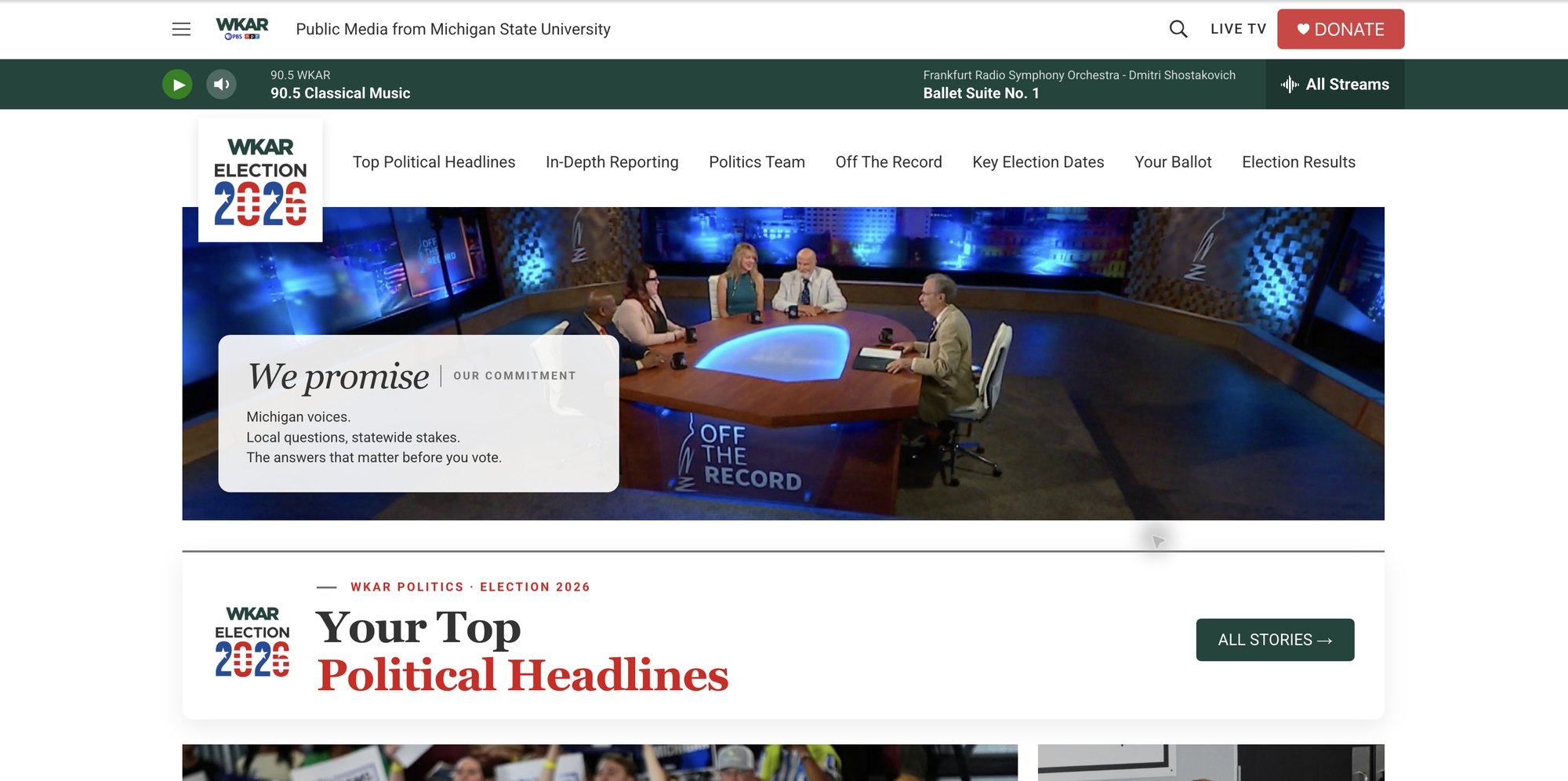
The launch team carried my prototype into a complete brand system across site, newsletters and on-air.
The promise, on the page
More time. Better questions. A reason to choose us.
Depth is the product advantage. WKAR can give a political conversation more time on the air than most local competitors, then turn that conversation into an on-demand digital resource. The Election 2026 page makes that advantage visible every day: interviews, analysis and reporting in one branded home.
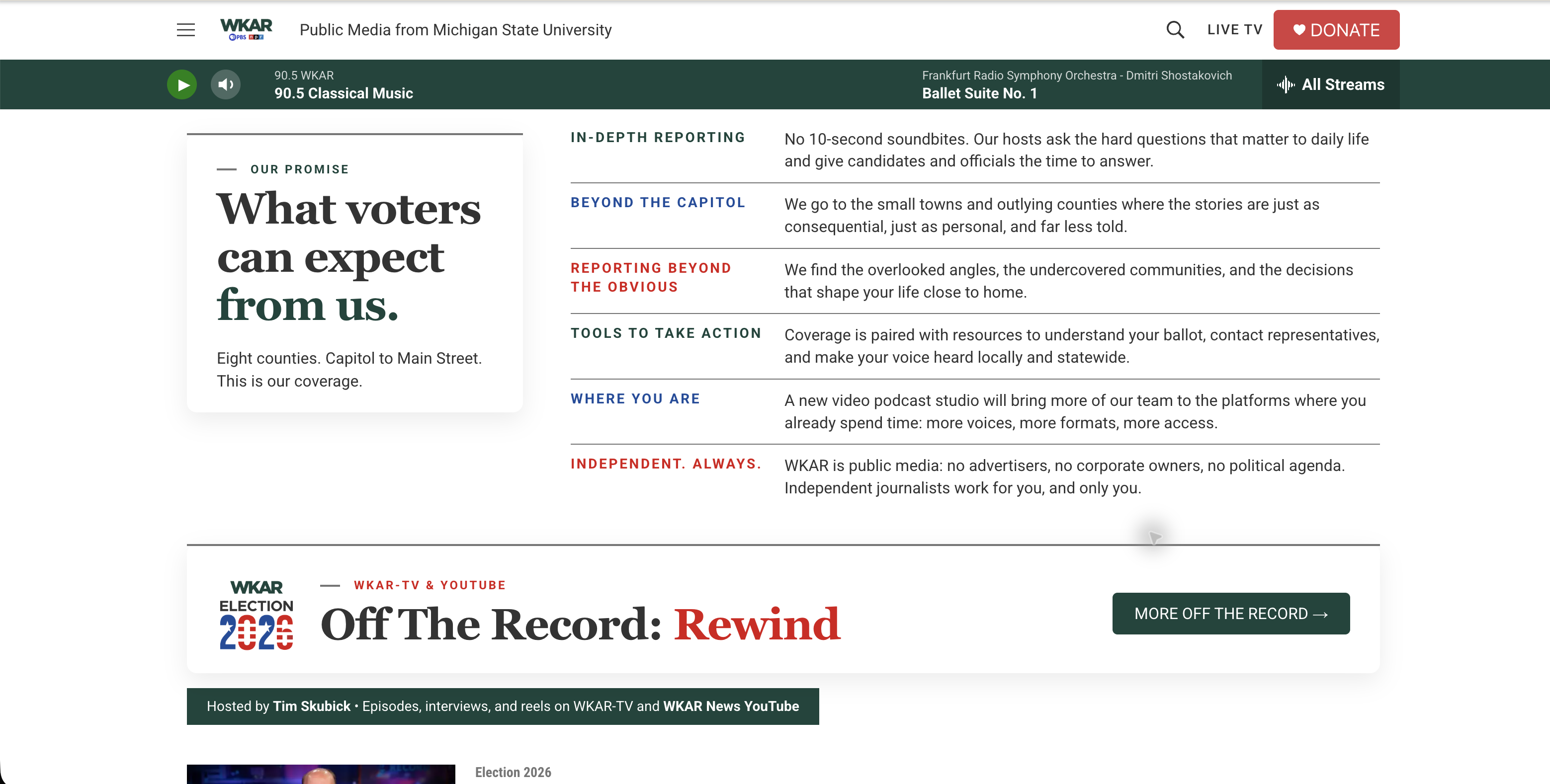
Long-form interviews
No ten-second soundbites. Hosts ask the hard questions and give candidates enough time to answer them.
Daily conversation & analysis
The day’s political news becomes a deeper conversation about what happened, why it matters and what comes next.
Beyond the capitol
The small towns and outlying counties where the stories are just as consequential and far less told.
Independent. Always.
Coverage guided by public-service standards, not political or commercial pressure.
The build
Four sections, each with a job.
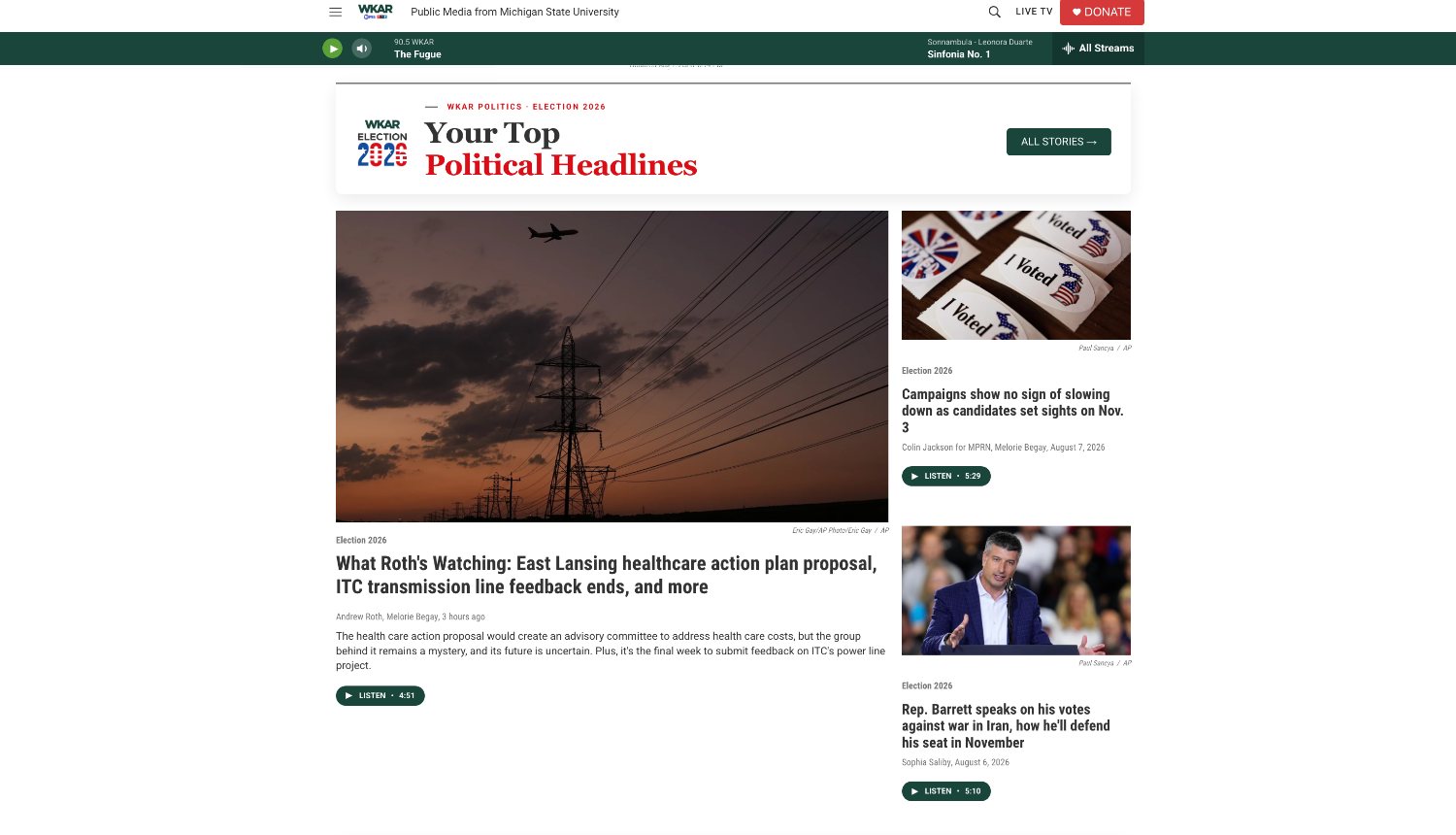
A lead well with bylines and listen times on every item. Audio and digital designed as one audience experience.
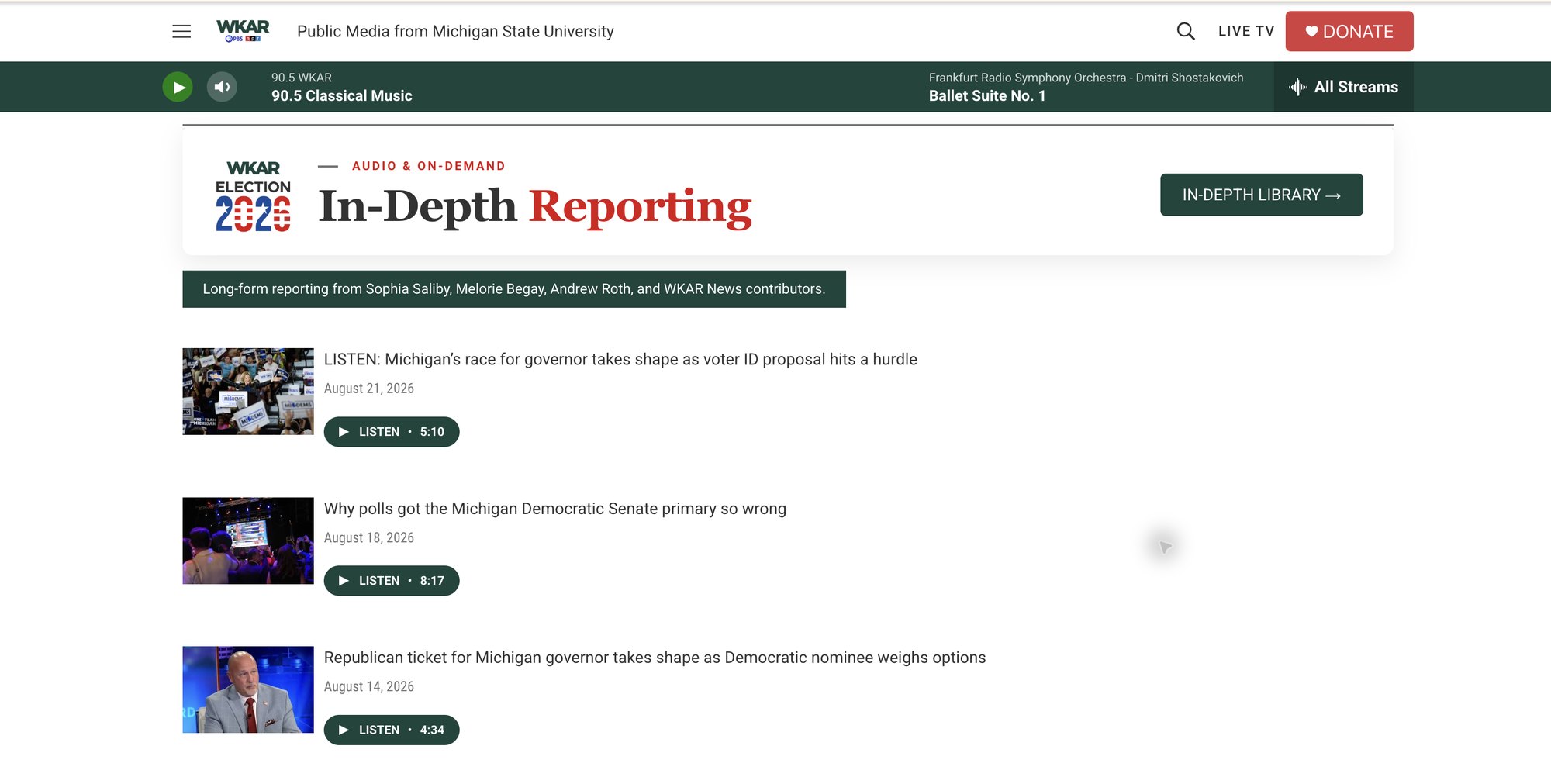
Long-form interviews, daily analysis and conversations organized as a durable on-demand library—the work that sets a small newsroom apart.
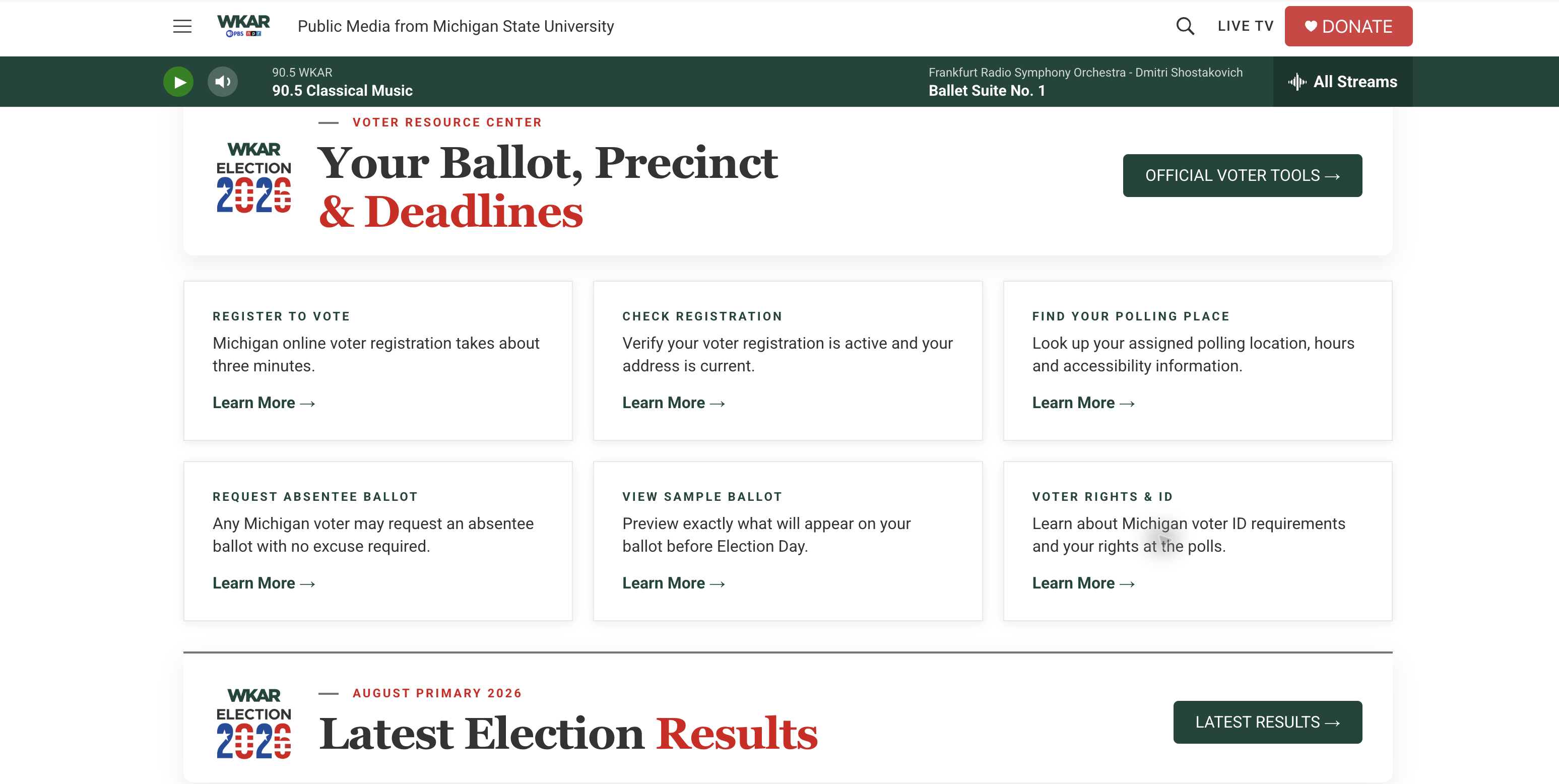
Registration deadlines, early voting, sample ballots, polling places, voter ID. Service journalism as a first-class section.
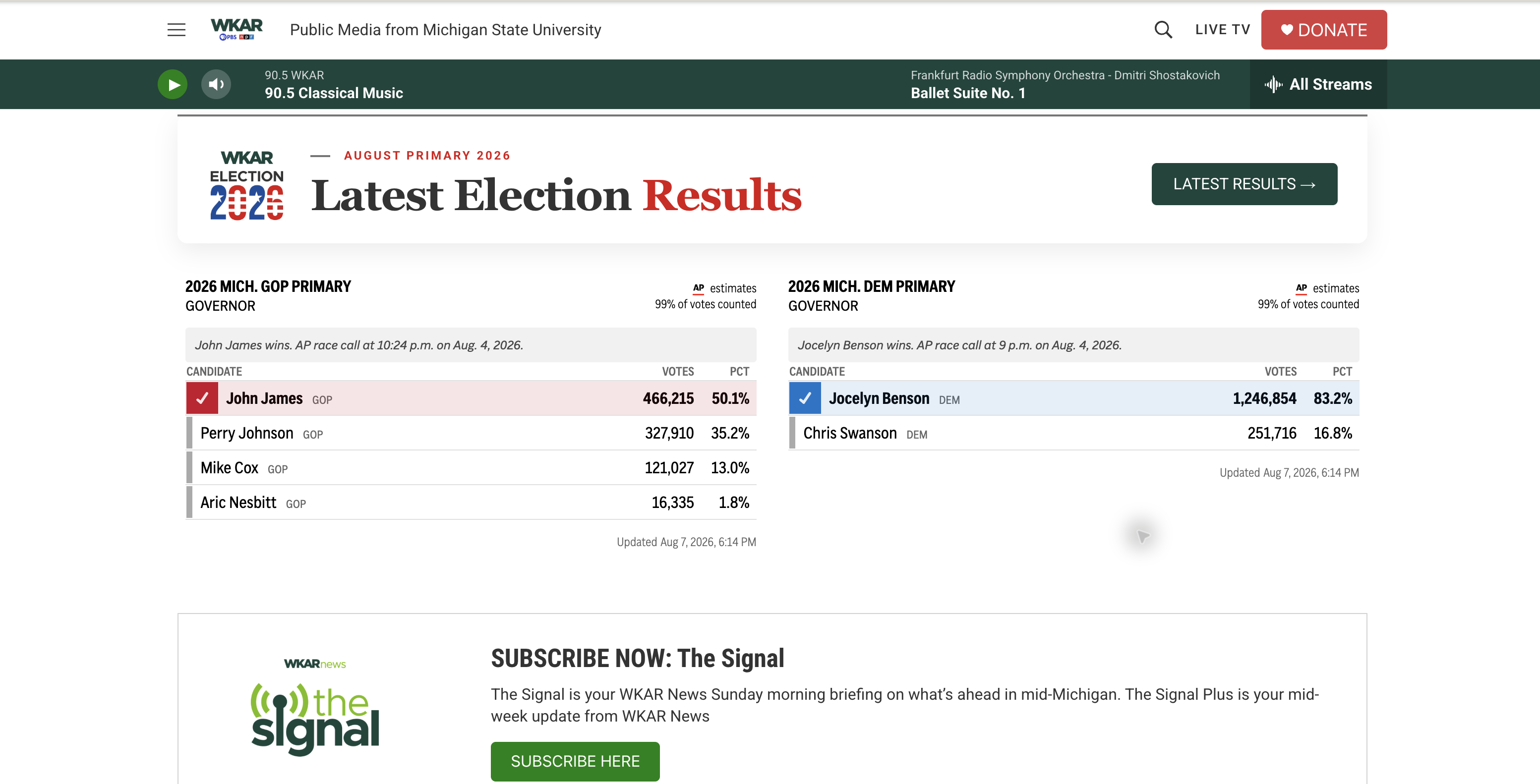
AP race calls, vote estimates and candidate totals share the same election identity and sit beside the subscription path into The Signal.
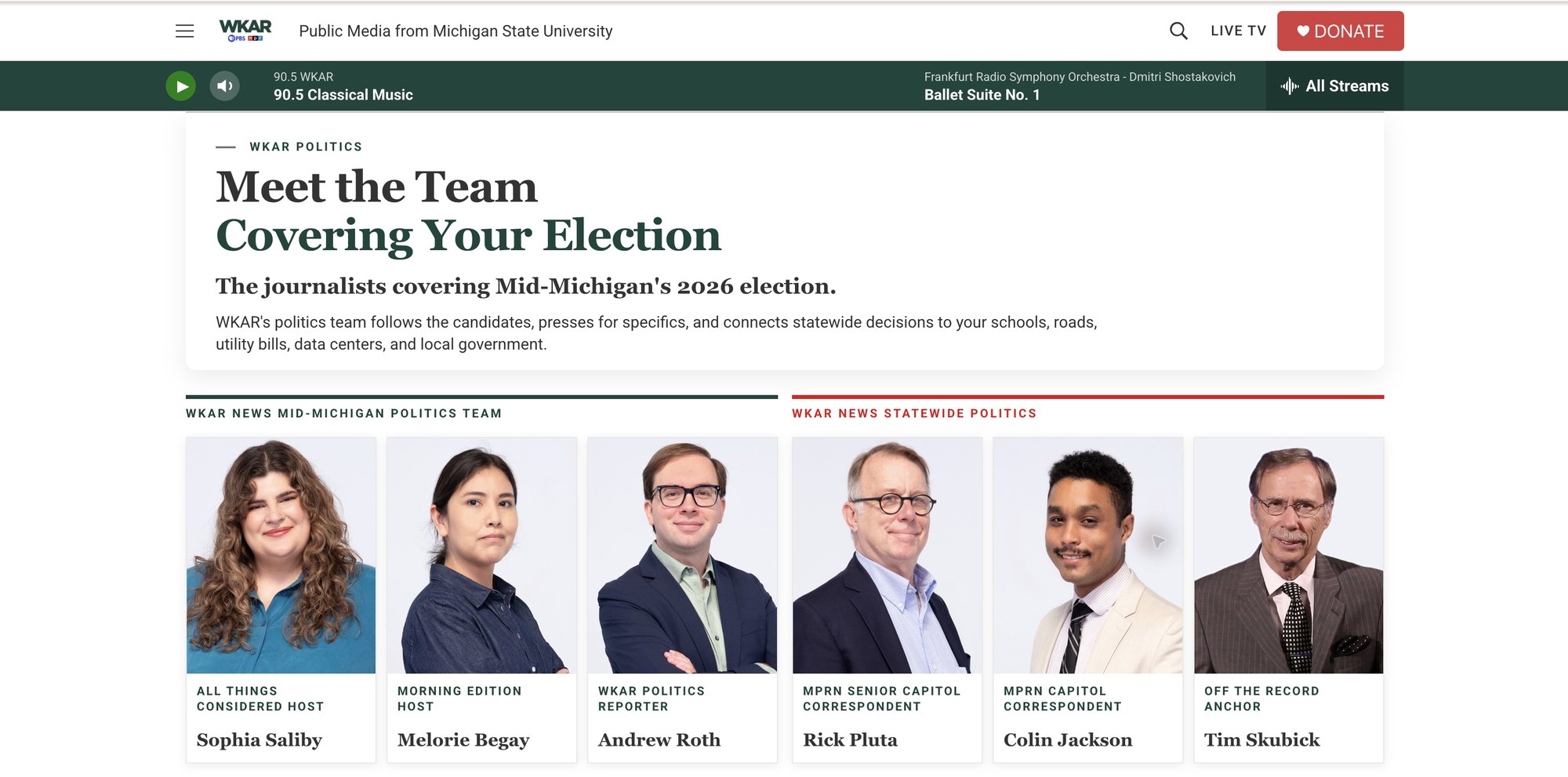
Talent as the front door
Six journalists, named and pictured, before a single headline.
The politics team is the front door, not a staff page buried three clicks down. Hiring a full-time local politics reporter to expand our in-depth election coverage was part of the plan, not an afterthought to it.
Brand into channel
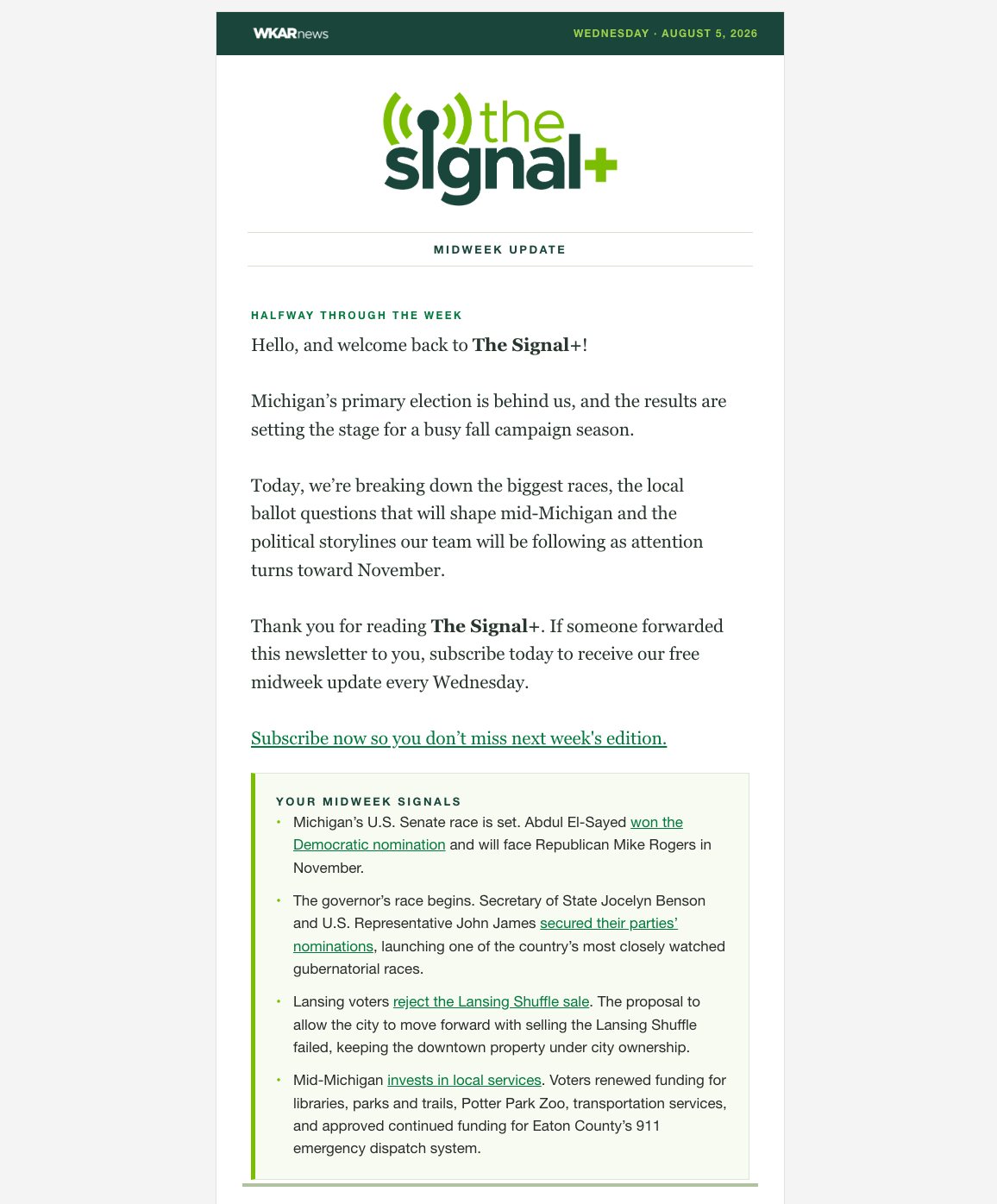
One identity, three channels, and a plan for how they feed each other.
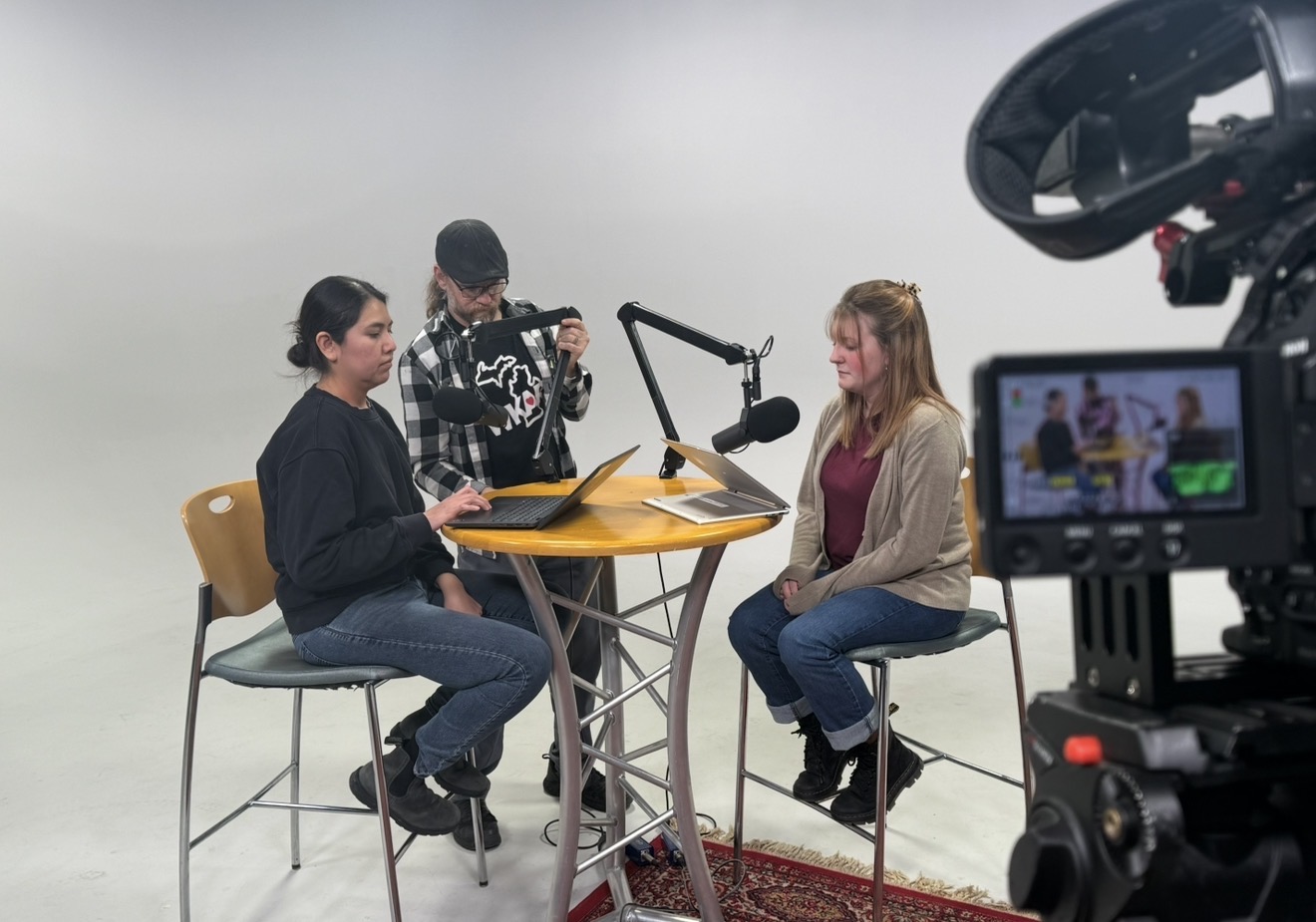
The Election 2026 banner and politics-team strip appear inside The Signal and The Signal+ every week, driving readers from inbox to site. Behind it, the 2026 Politics Plan and the Election 2026 promotion plan set the editorial cadence, audience paths and responsibilities before launch.
Strategy is only real once it has a shape someone can use.